Is a tunnel wash better for Puget Sound than washing in your driveway?
We measured it. Driveway washing uses about three times the water and sends soap straight into storm drains that empty into the Sound.
 Nadia PetrosyanFounder and CEOJuly 30, 20266 min read
Washing the car in the driveway on a sunny Saturday feels like the thrifty, low-impact choice. In a city surrounded by water, it is actually one of the more harmful things a car owner can do, and the reason is not just how much water it takes. It is where that water goes.
Where driveway wash water ends up
In most Seattle neighborhoods, the storm drain at the end of your street is not connected to a treatment plant. It flows directly, or after minimal settling, into Lake Washington, Lake Union, the Duwamish or Puget Sound. Everything that rinses off a car goes with it: detergent, brake dust with copper and zinc, oil, and road grime containing tire particles.
Tire particles have become a serious concern in the region. Researchers have linked a chemical from tire wear, known as 6PPD-quinone, to die-offs of coho salmon in urban creeks after rainstorms. Washing a car on pavement sends a concentrated dose of those particles into the same drains.
How a professional wash handles water
Commercial car washes in Washington are required to send wash water to the sanitary sewer or a treatment system, never the storm drain. At Spectra we go further with an on-site reclamation system in every tunnel.
- Water collects in underground settling tanks where solids and oils separate
- Cyclonic filters and ozone treatment clean the water for reuse in early wash stages
- Only the final spot-free rinse uses fresh reverse osmosis water
- Remaining water goes to the sanitary sewer for full treatment at King County plants
The numbers from our tunnels
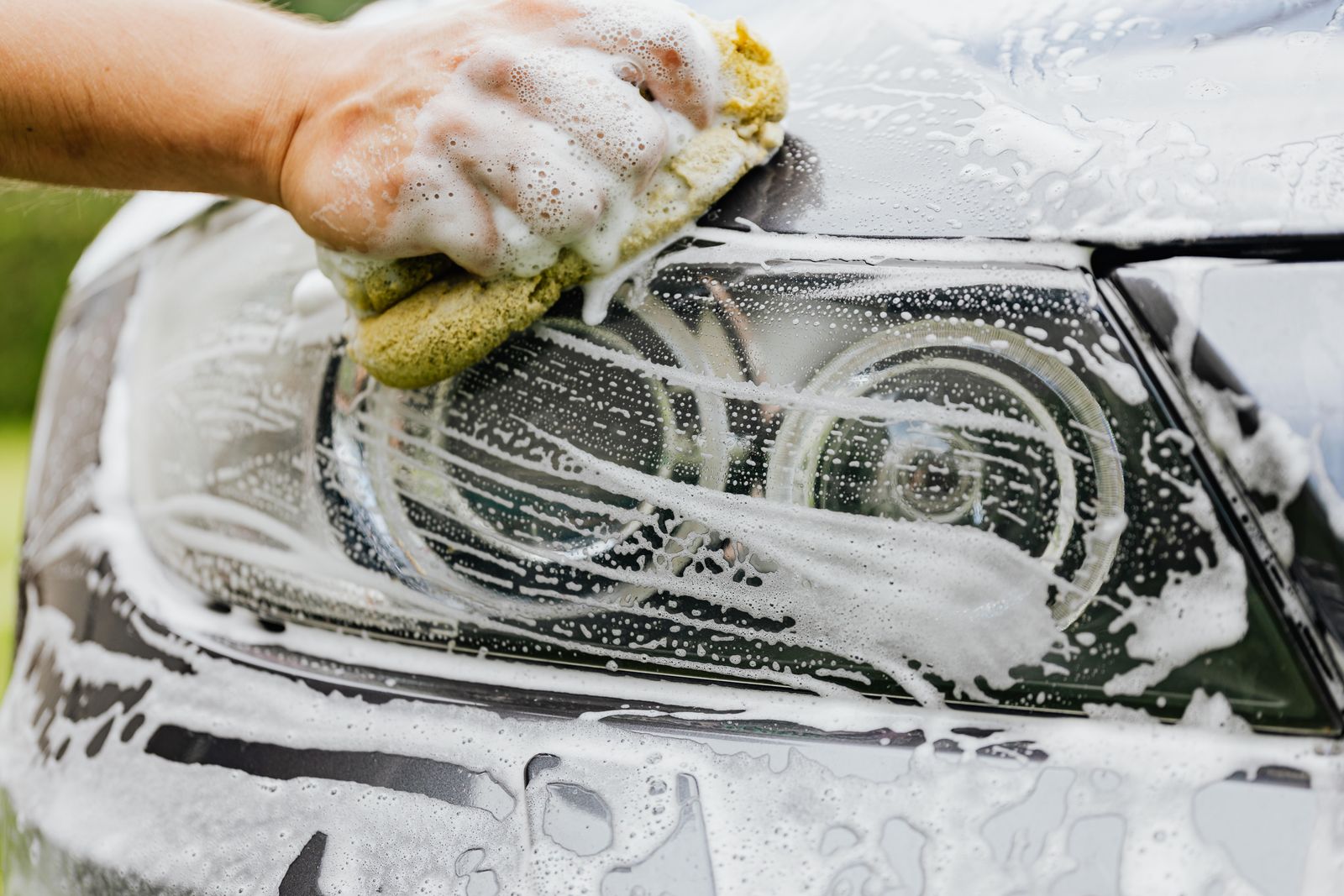
Across our five locations in 2025, we reclaimed 82 percent of the water used in the wash process. The average car used 31 gallons of fresh water. Estimates for a typical driveway wash with a garden hose range from 80 to 140 gallons, depending on how long the hose runs.
The greenest car wash is not the one that uses the least soap. It is the one that keeps dirty water out of the Sound.
What about soaps and chemicals?
Every product in our tunnels is biodegradable and phosphate free. Our ceramic and wax products are applied in precise doses by metered pumps, so there is no overspray running off the lot. We review safety data sheets with our chemistry supplier twice a year and have removed two products since 2023 when better alternatives became available.
Energy matters too
Blowers and pumps use a lot of electricity. Our tunnels run on Seattle City Light and Puget Sound Energy green power programs, and we switched every tunnel to LED lighting in 2022. Variable frequency drives on our dryer motors ramp down between cars instead of running at full power all day.
If you still prefer to wash at home
Some people enjoy washing by hand, and that is fine. If you do, park on grass or gravel so water soaks into the ground, use a bucket instead of a running hose, and choose a phosphate-free soap. King County also runs a free car wash kit program for charity fundraisers that blocks storm drains during events.
For everyday washing, though, a professional tunnel with reclamation is the easier choice for your car and for the salmon. And with an unlimited plan, it costs about the same as a few bottles of soap and a new sponge each month.